Mom Zilla Mother of T-Shirt Design
First Impressions: Bold, Playful, and Unapologetically Mom
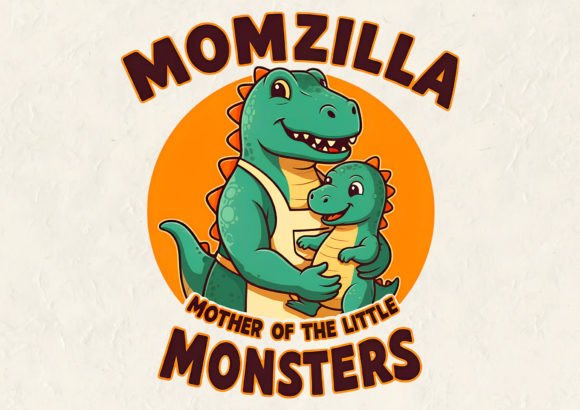
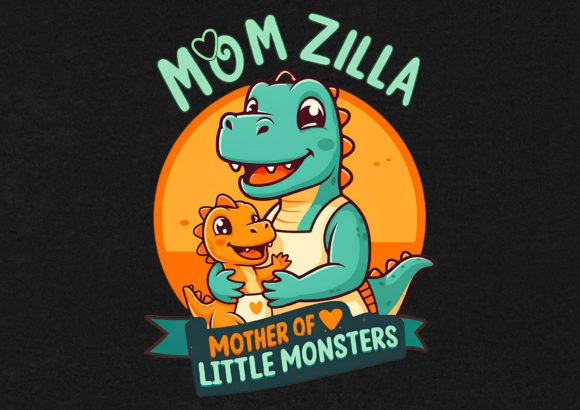
As someone who’s stitched hundreds of custom apparel pieces—from boutique baby onesies to embroidered aprons for local cafés—I opened the Mom Zilla Mother of T-Shirt Design expecting cheeky energy. What I got was exactly that: a tightly composed, high-contrast graphic with thick outlines, exaggerated proportions, and a cartoonish yet confident stance. It doesn’t whisper “mom”—it roars. The design leans into humor without slipping into cliché, balancing visual weight and readability at a glance. That matters—especially when you’re stitching it onto a curved cap brim or a textured tote bag where clarity can vanish in a single stitch.
A Real Project Test: Embroidering a Linen-Cotton Apron for a Local Bakery
Last week, I used the Mom Zilla Mother of T-Shirt Design as the centerpiece for a limited-run apron series for a neighborhood bakery. Their staff loved the vibe—fun but grounded, warm but strong—and the design translated beautifully onto midweight linen-cotton blend. Because the PNG file is 4500×5400 at 300 dpi, I had flexibility to scale it down cleanly for a 4" × 5" chest placement without pixelation. But here’s what I learned: the bold lettering and simplified monster silhouette hold up best when stitched with medium-density fill and crisp satin-stitched edges—not ultra-dense fills that blur the expression. On lighter fabrics, it pops. On charcoal or navy, I swapped to bright white or neon yellow thread to preserve legibility.
Where It Shines (and Where It Needs Care)
The Mom Zilla Mother of T-Shirt Design excels in contexts where personality drives purchase decisions:
- Custom apparel—especially sweatshirts, crewnecks, and relaxed-fit tees where the graphic has room to breathe;
- Embroidered patches—its clean lines and minimal interior detail make it ideal for iron-on or sew-on patches on backpacks, jackets, or denim;
- Baby and toddler items—think onesies, bibs, or burp cloths—provided you simplify or omit small text elements during digitization;
- Holiday or gift embroidery—mothers’ day bundles, teacher appreciation kits, or “survival kit” gift sets benefit from its lighthearted strength;
- Small shop product lines—it works as a cohesive anchor across mugs, tea towels, and tote bags when paired with consistent color palettes and mockups.
That said, proceed thoughtfully with:
- Stretchy or thin fabrics—like jersey knits or lightweight voile—where stabilizer choice becomes critical to prevent puckering around dense areas;
- Curved surfaces—caps and hats demand careful hooping and possibly slight design reduction to avoid distortion;
- Dark or textured backgrounds—always test thread contrast on scrap fabric first; matte black thread on charcoal fleece, for example, can disappear;
- Products needing frequent washing—towels, kids’ clothes, or workwear—so confirm your digitized version uses secure underlay and appropriate stitch angles for durability.
Design Assets That Support, Not Replace, Your Craft Judgment
This isn’t a plug-and-play machine embroidery design—it’s a high-res graphic, not an embroidery file. You’ll need to digitize it yourself or hire a digitizer. That’s actually a strength: it gives you full control over stitch type (satin for outlines, fill for shapes, running stitch for subtle accents), density, pull compensation, and underlay. For craft business owners and Etsy sellers, that means you can tailor each version to your specific machine, fabric, and aesthetic—no generic “one-size-fits-all” embroidery file limiting your brand voice.
Practical Notes Every Embroidery Designer Should Run Through
- Test on scrap fabric first—especially if using textured weaves or blends;
- Check thread color contrast on both light and dark backgrounds before committing to production;
- Review stitch density in tight corners—the original graphic’s bold lines may need manual adjustment to avoid thread buildup;
- Confirm hoop size compatibility with your intended placement (e.g., 4×4 for baby onesies vs. 6×10 for tote bags);
- Inspect small details like eyes or teeth—if scaling down below 3", simplify or remove fine features;
- Try black-and-white mockups to assess value contrast before stitching;
- Use proper stabilizer: cutaway for knits, tear-away for stable wovens, and fusible for lightweight linens;
- Verify licensing terms before selling finished products or digital embroidery files—this listing mentions usage for t-shirts, hoodies, mugs, and more, but commercial resale rights should be confirmed directly with the seller.
Why This Fits Real Creative Businesses—Not Just Hobbyists
For Etsy sellers and handmade shop owners, the Mom Zilla Mother of T-Shirt Design isn’t just another graphic—it’s a ready-made emotional hook. Customers buy confidence, relatability, and authenticity, and this design delivers all three without overcomplicating things. When stitched well on a premium apron or a cozy sweatshirt, it elevates a handmade product from “cute” to “curated.” It supports brand consistency across product types while leaving room for personalization—swap thread colors, add a name, or pair it with a coordinating border. And because it’s rooted in real mom-life humor—not trend-chasing irony—it holds up season after season.
Final Thought: A Graphic With Staying Power
I’ve seen dozens of “mom life” designs come and go. Most fade fast—too literal, too busy, or too safe. The Mom Zilla Mother of T-Shirt Design avoids those traps. Its balance of simplicity and spirit makes it adaptable, durable, and genuinely enjoyable to stitch. Whether you’re prepping for a craft fair, building a holiday collection, or launching a small line of embroidered gifts, this one earns its place in your design assets—not as filler, but as a functional, expressive, and quietly professional foundation.