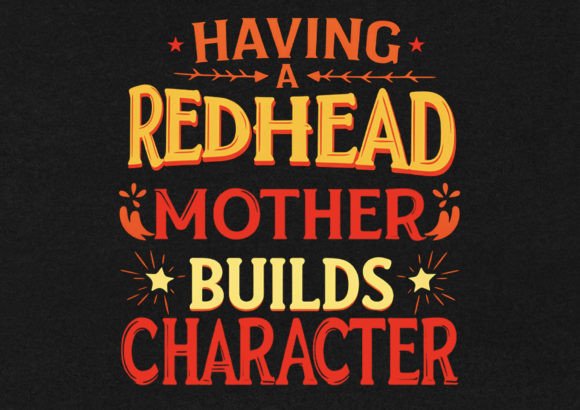
Having Redhead Mother T-Shirt Design
A Designer’s First Look: Warm, Whimsical—But Is It Embroidery-Ready?
When I opened the Having Redhead Mother T-Shirt Design, my first thought wasn’t “cute” — it was “characterful.” The illustration features a stylized redhead mom with soft curls, a gentle smile, and subtle floral accents. It leans into warmth without tipping into cliché — no oversized hearts or cartoonish fonts. That matters. As an embroidery designer who’s stitched hundreds of mother-themed pieces for baby showers, boutique aprons, and personalized sweatshirts, I know how easily sentiment can slip into saccharine. This one holds its ground.
Real-Life Test: Stitching It on a Linen-Cotton Tote Bag
Last week, I prepped this design for a custom embroidered tote bag — a staple for local mom groups and nursery boutiques. I resized it to fit a 4" × 5" hoop (a common sweet spot for tote front panels), then ran a test stitch on scrap linen-cotton blend with medium-weight cutaway stabilizer. Here’s what stood out:
- The central figure reads clearly at that scale — facial features hold up thanks to clean line weight and intentional negative space around the hairline and collar.
- Floral elements are simplified just enough to avoid fill-stitch bleeding on textured fabric, but still carry charm.
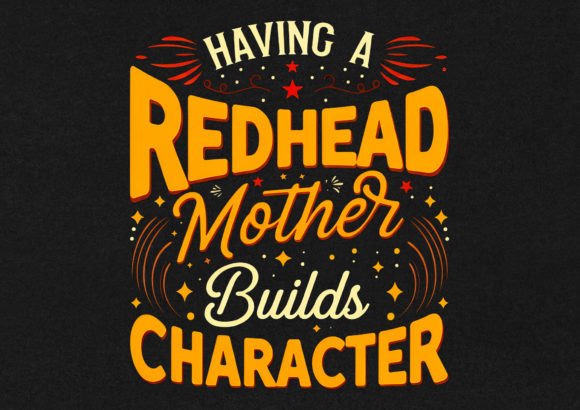
- No tiny text — the phrase “Having a Redhead Mother” is set in a friendly, rounded sans-serif. At 8–10 mm height, it stayed legible after stitching, even with standard 40-weight rayon thread.
Where It Shines (and Where It Needs Caution)
This Having Redhead Mother T-Shirt Design excels in projects where personality and emotional resonance matter more than photorealism. Think: embroidered baby onesies for newborn photo sessions, relaxed-fit sweatshirts for school PTA volunteers, or kitchen towels for a handmade gift shop. Its balanced proportions and moderate detail level make it forgiving across fabric types — especially stable weaves like cotton poplin, twill, or medium-knit fleece.
That said, proceed carefully with:
- Curved surfaces like caps or beanies — the design’s horizontal orientation and centered composition don’t wrap naturally; consider cropping or repositioning before digitizing.
- Thin or stretchy fabrics (e.g., lightweight jersey or modal blends) — without proper stabilizer and hooping technique, satin-stitched edges may ripple. Always test.
- Dark or heavily textured backgrounds — while the PNG file is high-res (4500×5400 px, 300 dpi), embroidery translation depends on thread contrast. I recommend checking black-and-white mockups first to assess silhouette clarity.
- Dense stitch zones — though not overly complex, the hair and floral motifs use layered fill and satin stitches. On low-thread-count fabrics, over-stabilizing can stiffen the finished product unnecessarily.
What It Adds to Your Handmade Product — Beyond Aesthetics
As a craft business owner, I don’t just ask *“Does it stitch well?”* — I ask *“Does it sell?”* This design quietly strengthens perceived value. When stitched on a heavyweight organic cotton tee or a linen pillow cover, it feels intentional — not mass-produced. Customers recognize care in proportion, spacing, and restraint. That builds trust, especially for Etsy sellers offering personalized gifts. It also supports brand consistency: whether you’re selling holiday embroidery kits or curated nursery bundles, Having Redhead Mother T-Shirt Design fits seamlessly into a warm, inclusive, modern aesthetic — no rebranding required.
Practical Notes Every Embroidery Designer Should Check
Before adding this to your next batch of custom apparel or digital embroidery files, run through these checkpoints:
- Test on scrap fabric first — especially if using textured or dark material. Note how thread colors interact with base fabric tone.
- Review stitch density — look for overlapping fills or tight satin columns that could cause puckering or thread breakage on slower machines.
- Confirm hoop size compatibility — the PNG is print-ready, but embroidery requires vector or DST/PES conversion. Ensure your digitizer understands the intended application (e.g., patch vs. flat garment).
- Inspect small details — eyelashes, petal edges, and letter terminals should remain distinct at your target size. If they blur, simplify before stitching.
- Compare light/dark background mockups — use grayscale previews to verify contrast and readability.
- Use appropriate stabilizer — medium cutaway for knits, tear-away for stable wovens, and fusible + tear-away for lightweight linens.
- Verify licensing — since this is listed as a Graphics asset for T-Shirt Designs, confirm whether commercial use (e.g., selling finished embroidered items or reselling digitized versions) is permitted before scaling production.
Final Thought: A Thoughtful Anchor for Meaningful Makes
I’ve passed on dozens of “mom-themed” designs because they feel generic, overly busy, or technically fragile. Having Redhead Mother T-Shirt Design isn’t flashy — but it’s reliable. It works for machine embroidery design, applique design, and even hybrid hand-embroidered touches. Whether you’re prepping a holiday embroidery kit, updating your Etsy shop’s bestsellers, or designing a small shop product line for new parents, this piece lands with sincerity. It doesn’t shout — it smiles, softly, and stays memorable. And in a crowded craft market? That kind of quiet confidence is rare — and worth stitching.