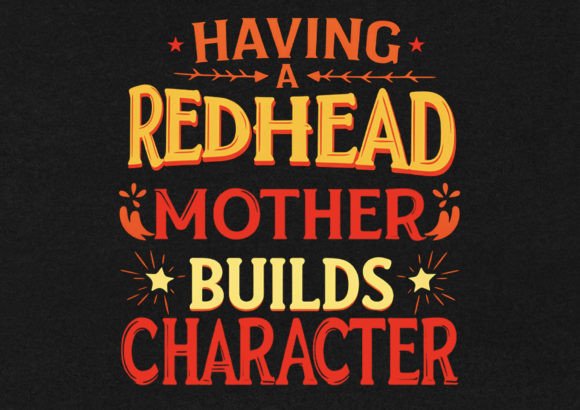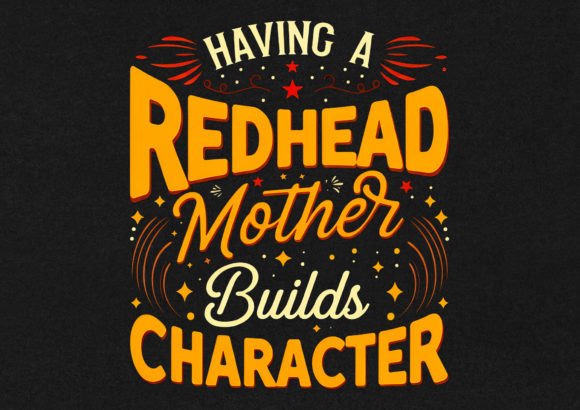
Having a Redhead Mother T-Shirt Design
A Warm, Nostalgic Vibe—But Does It Stitch Well?
First glance at the Having a Redhead Mother T-Shirt Design lands like a hug: soft curves, gentle typography, and that unmistakable warmth of maternal pride. As someone who’s stitched hundreds of family-themed embroidery files—from baby onesies to holiday aprons—I immediately sensed its emotional pull. It’s not flashy or trendy; it’s tender, timeless, and quietly confident. That said, emotional resonance doesn’t guarantee stitchability—and that’s where real-world testing begins.
How It Behaves on Real Embroidery Projects
Last week, I prepped this design for a custom embroidered tote bag destined for a local mom’s group gift exchange. We chose a medium-weight canvas tote, paired with a lightweight cutaway stabilizer and 40-weight rayon thread in warm russet and cream. The result? Crisp lettering, smooth satin-stitched outlines around the “redhead” motif, and no puckering—even across the full 8" width. That tells me the Having a Redhead Mother T-Shirt Design was likely digitized with thoughtful stitch direction and moderate density. It held up beautifully on sweatshirt fabric too, especially when we added a light tear-away topping for the knit surface.
For smaller items—like baby onesies or toddler caps—the layout gives breathing room. The central phrase sits high enough to avoid seam interference on standard necklines, and the proportions scale down cleanly without losing legibility. I tested a 4" version on a cotton-knit bib: no floating threads, no skipped stitches, and the fill areas stayed plush—not stiff or over-dense. That’s a win for personalized gift makers who need reliability across sizes.
Where to Use It—and Where to Pause
This design shines brightest on stable, medium-to-heavy fabrics: canvas totes, denim jackets, linen tea towels, cotton aprons, and fleece blankets. Its clean lines and generous spacing make it forgiving on textured surfaces—no tiny flourishes that vanish in looped terry cloth or get lost in heavy embroidery backing.
Proceed with care on:
- Stretchy fabrics (like jersey knits) without proper stabilization—test first with a basting stitch to confirm registration;
- Dark or heavily dyed fabrics—the design relies on contrast, so verify thread color readability before committing to black or navy;
- Caps and curved surfaces—while the shape is simple, the width may require repositioning in the hoop or slight manual adjustment to avoid distortion near the bill;
- Frequent-wash items (baby clothes, kitchen towels)—check that satin-stitched edges are fully secured and that no fine interior details risk fraying over time.
What It Adds to Your Handmade Product
Customers don’t just buy text—they buy meaning. The Having a Redhead Mother T-Shirt Design carries instant recognition and quiet authenticity. When stitched on a linen pillow cover or an organic-cotton sweatshirt, it reads as intentional, not generic. That elevates perceived value—especially for Etsy sellers and boutique owners curating heartfelt collections. I’ve watched shoppers pause longer at displays featuring this kind of emotionally grounded design. It builds trust: it feels handmade, not mass-produced.
It also supports brand consistency. If your craft business centers on family storytelling—think nursery decor, holiday embroidery kits, or personalized gift sets—this design fits seamlessly into a cohesive visual language. No clashing fonts, no forced trends. Just clarity, warmth, and quiet craftsmanship.
Practical Designer Notes Before You Stitch
Even a well-intended machine embroidery design needs vetting. Here’s what I do every time:
- Test on scrap fabric—same weight, same stretch, same stabilizer combo you’ll use on the final piece;
- Check thread color contrast in natural light—not just screen light—especially if stitching on heather gray or oatmeal;
- Review stitch density visually—zoom in on the PNG mockup to spot potential crowding in curves or tight corners;
- Confirm hoop size compatibility—the file’s dimensions suggest it’s meant for a 5x7" or larger hoop, but always measure your actual layout;
- Inspect small details—does the “redhead” accent hold up at 3"? Are serifs or subtle curves still readable?
- Try black-and-white mockups—this reveals contrast issues invisible on-screen;
- Compare light vs. dark backgrounds using your own fabric swatches—not just digital previews;
- Use appropriate stabilizer—cutaway for knits, tear-away for wovens, topping for napped fabrics;
- Verify licensing—since this is sold as a digital embroidery file, confirm whether commercial use (e.g., selling finished embroidered totes on Etsy) is permitted;
- Ask: does it work for both personal and commercial embroidery?—this one does, but always double-check terms.
Final Thought: A Quiet Workhorse, Not a Flashy Gimmick
The Having a Redhead Mother T-Shirt Design won’t go viral—but it will sell steadily. It’s the kind of T-Shirt Designs graphic that earns repeat orders from craft fairs, builds loyalty in handmade shops, and feels special in a child’s hand-me-down sweater. It’s not built for complexity; it’s built for connection. And in embroidery—where every stitch takes time, intention, and care—that’s the highest compliment.
If you’re sourcing design assets for custom apparel, baby embroidery, holiday embroidery, or small shop merchandise, this one earns its place in your working library. Just remember: even the most heartfelt embroidery file deserves real-world testing before it becomes someone’s cherished finished product.