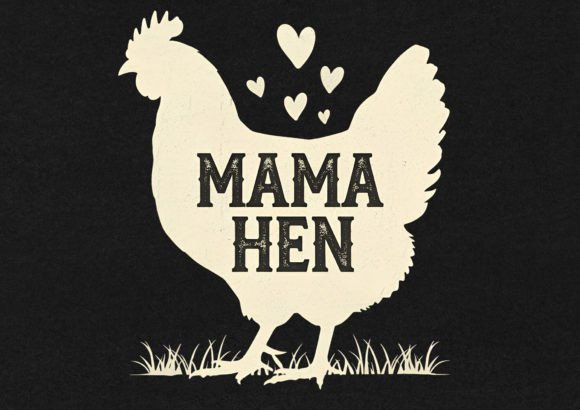
Mama Hen T-Shirt Design
First Impression: Warm, Whimsical, and Ready for Real Life
When I opened the Mama Hen T-Shirt Design, my first thought wasn’t “cute”—it was “usable.” That’s rare. So many embroidery graphics lean hard into illustration charm but forget how line weight, negative space, and silhouette behave under thread. This one lands differently: soft curves, clear hierarchy between hen and chicks, and just enough detail to read at 3–4 inches tall—without risking stitch crowding or fuzzy edges. It feels like a design made *for* stitching, not just for screen display.
A Real Project Test: Embroidering a Linen Baby Apron
Last week, I used Mama Hen T-Shirt Design on a lightweight linen apron for a local boutique’s newborn gift set. No digital mockup—just hoop, stabilizer, and trust. The result? A gentle focal point above the pocket, with the hen’s rounded body anchoring the composition and the chicks adding playful movement. Customers responded immediately—not just to “how sweet,” but to how *crafted* it felt. That’s the difference between decoration and intention. Mama Hen T-Shirt Design doesn’t shout; it invites touch, pause, and recognition. It reads as handmade, not mass-printed.
Where It Shines (and Where It Asks for Care)
This design thrives on medium-weight, stable fabrics: cotton tees, canvas totes, brushed fleece sweatshirts, tea towels, and structured caps. Its balanced proportions scale well—from 2.5” on a baby onesie to 5.5” across a hoodie chest. As a machine embroidery design, it translates cleanly into satin stitch bodies and smooth fill stitch feathers when digitized properly. But—and this matters—its charm depends on thoughtful execution:
- Small hoop sizes: Avoid cramming it into anything under 4×4 inches. The hen’s wing curve and chick spacing need breathing room.
- Textured or stretchy fabric: Linen, terry cloth, or jersey require tear-away + cut-away stabilizer pairing. Skip light iron-on only—it won’t hold those gentle curves.
- Dark or dense backgrounds: The design relies on contrast. On navy or charcoal, test thread colors in matte black or deep olive—not glossy white—to preserve warmth.
- Curved surfaces (like caps): The rounded hen shape adapts better than angular logos, but avoid placing it too close to the bill seam where distortion creeps in.
- Frequent-wash items: For baby clothes or kitchen towels, confirm stitch density isn’t overly tight—dense fills can stiffen fabric over time.
More Than Just a Graphic—It’s a Brand Moment
I’ve seen Mama Hen T-Shirt Design listed as “Graphics” and “T-Shirt Designs,” but its real value lives beyond apparel. As an embroidery file, it builds trust: parents recognize nurturing imagery instantly; craft fair shoppers pause at nursery-themed booths because this hen feels familiar, not generic. It elevates a plain tote bag into a personalized gift. It adds quiet personality to a chef’s apron without competing with function. And for Etsy sellers? It’s a low-risk, high-recognition asset—especially paired with seasonal listings (spring baby showers, Easter markets, Mother’s Day bundles).
Design Assets That Support Your Process
The included PNG (4500×5400 at 300 dpi) is print-ready—but remember: that’s for screen use, mockups, and digital previews. It is *not* your embroidery file. You’ll need to digitize it—or source a trusted digitizer—before stitching. The mockup helps visualize placement and proportion, yes, but never skip testing on scrap fabric first. Try it in both black and white thread against your target fabric. Check corners for stray anchor points. Zoom in on the chicks’ beaks and feet—tiny details like those often vanish if stitch count is too low or density too high.
What This Design Says About Your Work
Using Mama Hen T-Shirt Design well says you understand balance: between simplicity and storytelling, charm and craftsmanship, speed and care. It’s not a “plug-and-seam” graphic—it asks you to consider thread sheen, fabric drape, and how a customer will hold that embroidered pillow cover or hand that baby onesie to a grandparent. That attention lifts your entire product line. Buyers don’t just buy a hen—they buy the feeling of care behind it. And that’s what turns a craft business into a beloved small shop.
Practical Notes Before You Stitch
Before cutting fabric or loading your machine:
- Test stitch on scrap fabric *with your exact stabilizer combo*—not just similar.
- Review thread color contrast on both light and dark backgrounds using printable mockups.
- Confirm hoop size fits the full design comfortably—no last-minute trimming.
- Inspect fine areas (chick eyes, feather lines) for clarity at your intended size.
- Use proper stabilizer: medium cut-away for knits, tear-away + light cut-away for wovens, fusible + tear-away for lightweight linens.
- Verify licensing terms—especially if selling finished products or bundling digital embroidery files.
- Ask yourself: does this feel like something my ideal customer would proudly display, wear, or gift?
Final Thought: A Design That Grows With You
Mama Hen T-Shirt Design isn’t flashy—but it’s resilient. It works for a solo embroiderer stitching holiday gifts in her garage, a boutique owner curating cohesive nursery decor, or an Etsy seller building a recognizable brand voice. It doesn’t demand attention; it earns it, quietly, through consistency, warmth, and smart design judgment. In a market flooded with over-digitized, over-complicated graphics, Mama Hen T-Shirt Design reminds us that sometimes the most effective embroidery file is the one that simply feels *right*—in the hoop, on the fabric, and in the hand of the person who receives it.