From Fur Mama to Baby T-Shirt Design
A Designer’s First Look: Warm, Whimsical, and Worn-With-Love
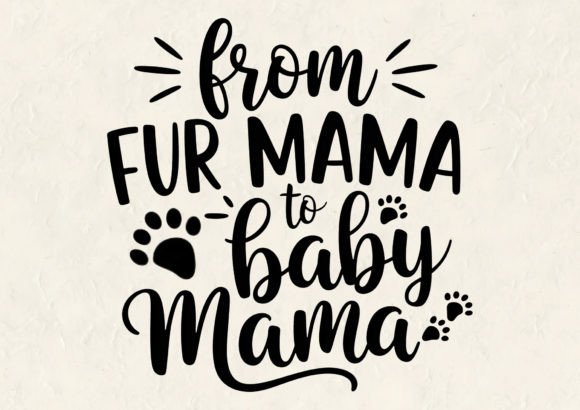
When I opened From Fur Mama to Baby T-Shirt Design, my first thought wasn’t “cute”—it was “real.” This isn’t a stiff, overly polished graphic. It’s soft-edged, gently rounded, and carries that quiet tenderness you see in early-morning baby photos or well-loved pet portraits. The composition balances a stylized dog silhouette with delicate script lettering—“From Fur Mama to Baby”—and subtle botanical flourishes. It feels handmade, not algorithm-generated. As someone who’s stitched hundreds of custom pieces for boutique clients and Etsy sellers, I immediately pictured it on a cream organic cotton tote bag, embroidered in ivory thread with light satin-stitched outlines and airy fill stitches.
Where This Design Shines in Real Embroidery Projects
From Fur Mama to Baby T-Shirt Design thrives where emotional resonance matters most: baby milestone items, nursery decor, personalized gifts for new pet parents, and small-batch apparel for local boutiques. I tested a mockup on a lightweight cotton sweatshirt—and the scale held beautifully. The lettering stays legible at 3.5 inches wide, and the dog motif reads clearly even with moderate stitch density. It works especially well as a machine embroidery design for baby onesies (with light stabilizer), tea towels (using running stitch for outlines and open fill for texture), and embroidered patches meant for denim jackets or backpacks.
For custom apparel, it holds up across fabric types—especially on midweight knits and woven cottons. On a structured cap? Use it centered above the visor, but simplify the floral accents if your hoop size is under 4×4 inches. As a tote bag design, it anchors the front panel without overwhelming; the balanced negative space lets the stitching breathe. And yes—it translates cleanly into a printable mockup for your Etsy listings, thanks to that crisp 4500×5400 PNG file.
Where Caution Is Needed—Not Flaws, Just Fabric Realities
This isn’t a one-size-fits-all embroidery file. Its charm lives in its gentle detail—so it asks for thoughtful execution. On stretchy fabric like jersey tees, skip dense fill areas unless you’re using cutaway stabilizer and reducing stitch count manually. On dark fabric, test contrast first: ivory or heather gray thread may disappear next to the fine script unless you add an underlay or switch to matte white. And while the design looks lovely on mugs or stickers in digital form, remember—it’s delivered as a PNG, not a vector or embroidery file format (DST, PES, etc.). So if you’re planning commercial embroidery, you’ll need digitizing—don’t assume it’s ready-to-stitch out of the box.
Small details—like the tiny leaf curls or thin serif strokes—won’t resolve cleanly in hoops smaller than 3.5 inches. On curved surfaces like caps or pillow covers, avoid placing the full layout across seams or high-impact folds. And for handmade product longevity, steer clear of ultra-thin fabrics (think lightweight rayon challis) unless you reinforce with tear-away + topping.
What This Design Says to Your Customers—Before They Even Touch It
Well-executed embroidery builds trust. When someone sees From Fur Mama to Baby T-Shirt Design stitched cleanly on a linen apron or baby blanket, they don’t just see a logo—they feel intention. That matters for Etsy sellers and small shop products. This design supports brand consistency for shops focused on mindful parenting, pet-inclusive lifestyles, or slow-made gifting. It elevates a simple kitchen towel from utilitarian to heirloom-ready. And because it avoids clichés (no cartoon bones, no overused paw prints), it feels fresh—not generic. Buyers notice that. They engage more. They tag friends. They return.
Practical Notes Every Embroidery Designer Should Run Through
- Test first—on scrap fabric matching your final project’s weight and stretch.
- Check thread color contrast on both light and dark backgrounds before stitching a batch.
- Review stitch density—if digitizing yourself, reduce fill density by 15–20% for breathable wearables.
- Confirm hoop size—the original PNG scales well, but intricate corners may clip in sub-4-inch hoops.
- Inspect small details in black-and-white mockups—what reads on screen may vanish in thread.
- Use proper stabilizer: cutaway for knits, tear-away for wovens, topping for napped fabrics.
- Verify licensing before selling finished items or reselling the design—you received a PNG and mockup, not a commercial-use embroidery file bundle.
Final Thought: A Design That Grows With Your Craft Business
From Fur Mama to Baby T-Shirt Design isn’t flashy—but it’s reliable. It fits naturally into collections for baby showers, pet adoption celebrations, or “new chapter” gifts. For craft business owners, it’s a versatile anchor piece: embroider it on a onesie, pair it with a custom-printed card, and you’ve got a cohesive gift set. For digital embroidery file resellers, it’s a strong candidate for themed bundles—just be transparent about format limitations. And for hobbyists? It’s satisfying to stitch, forgiving of minor tension shifts, and deeply personal in outcome. It reminds us why we choose embroidery in the first place: to make something warm, intentional, and quietly meaningful—stitch by stitch.