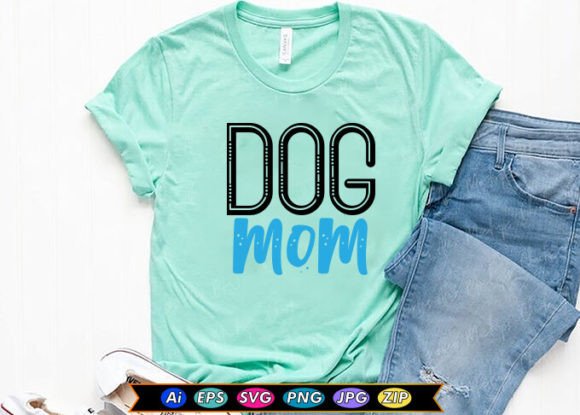
Dog Mom T-shirt Design
First Impression: Warm, Clean, and Ready for Real Stitches
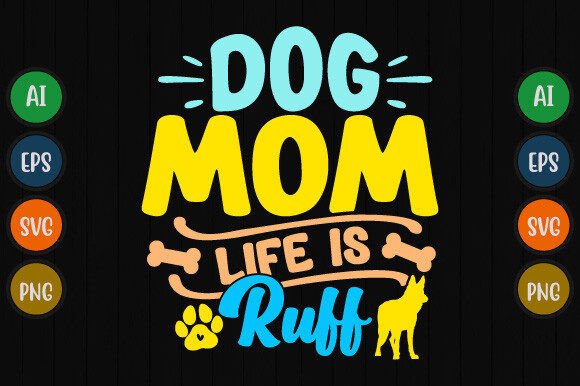
When I opened the Dog Mom T-shirt Design, my first thought wasn’t “cute”—it was “confident.” The layout breathes. The typography has gentle curves and balanced spacing—not too tight, not too loose—and the subtle paw print accent feels intentional, not tacked on. It’s a design that leans into warmth without leaning into clutter. That matters more than you’d think when you’re stitching it onto a baby onesie or embroidering it onto a linen tea towel for a boutique launch.
This Isn’t Just a T-Shirt Design—It’s a Handmade Product Anchor
I recently used the Dog Mom T-shirt Design as the centerpiece for a small-batch embroidered tote bag series—think sturdy canvas, medium-weight stabilizer, and matte cotton thread. It stitched cleanly at 3.8" wide, held its shape through washing tests, and kept its personality even after three rounds in cold water. Customers noticed it immediately—not just because of the sentiment, but because the letterforms stayed crisp and the paw detail didn’t blur into a blob of satin stitch.
That clarity translates across projects: it works beautifully as a sweatshirt embroidery (especially on midweight fleece), holds up well on structured caps when resized thoughtfully, and reads clearly even on textured fabrics like twill or brushed cotton. As a machine embroidery design, it avoids over-detailing—no micro-hairlines or nested shadows—so it doesn’t fight your needle or your stabilizer.
Where It Shines—and Where to Pause Before Pressing Start
The Dog Mom T-shirt Design is strongest on stable, medium-to-heavy fabrics: tote bags, aprons, pillow covers, kitchen towels, and unstructured jackets. On baby embroidery? Yes—but only if you reduce size slightly and confirm stitch density isn’t too high for delicate knit. On stretchy fabric like jersey tees? Use cutaway + tear-away combo stabilizer and slow your machine down. Don’t skip that step.
It’s less ideal for tiny hoops under 4x4"—the paw icon and letter spacing need breathing room. And while the transparent PNG and SVG files make it easy to resize for print-on-demand mockups, remember: digital flexibility ≠ automatic embroidery readiness. Always test the embroidery file on scrap fabric first—especially if you’re planning commercial embroidery or listing finished products on Etsy.
Watch These Details Closely
- Small lettering: The “Mom” is legible at 2.5", but below that, satin stitch edges may soften—check your machine’s minimum recommended height for clean lettering.
- Fabric contrast: On dark fabric, avoid light thread unless you’ve added backing; the design’s openness means thread color contrast directly affects readability.
- Curved surfaces: For caps or curved pillow seams, consider slight digitizing tweaks—like shortening vertical strokes—to prevent distortion.
- Wash durability: Fill stitch areas are moderate—not dense enough to crack, not sparse enough to snag. Still, recommend gentle cycles for finished products.
How It Builds Trust—Before the First Stitch
Customers don’t buy “Dog Mom” slogans—they buy recognition, sincerity, and craftsmanship. This design supports that. Its balanced weight and consistent line thickness say “designed by someone who’s stitched before,” not “generated and exported.” That perception lifts perceived value—whether you’re pricing a $38 embroidered sweatshirt for your small shop or bundling it as a printable mockup for other designers.
For Etsy sellers and craft fair vendors, it adds quiet professionalism. No frantic resizing, no pixelated previews, no last-minute panic about licensing ambiguity (though always verify terms—this listing includes AI, SVG, EPS, JPG, and transparent PNG, which suggests broad editing use, but commercial resale rights should be confirmed separately).
Real Designer Notes You’ll Actually Use
- Test the embroidery file on your exact fabric + stabilizer combo—not just once, but with two thread colors (e.g., charcoal + cream) to assess contrast.
- Check how the paw icon stitches at your intended size: does it hold definition, or does the satin stitch bleed? Adjust density if needed.
- Compare black-and-white mockups on light vs. dark backgrounds—some details vanish faster than others.
- If using for personalized gifts, leave 0.25" margin around the design for hoop clearance and fabric movement.
- For layered garments (like embroidered patches on denim jackets), verify the design fits within standard patch dimensions before finalizing placement.
- Review the editable AI and SVG files—if you plan to recolor or adapt for seasonal variants (e.g., “Dog Mom Christmas Edition”), those formats give real flexibility.
Final Thought: A Quiet Workhorse, Not a Flashy Gimmick
The Dog Mom T-shirt Design won’t shout. It won’t go viral for its novelty. But it will sell—consistently—because it respects both the maker and the wearer. It stitches cleanly, scales reliably, and carries emotional weight without visual noise. In a market flooded with over-digitized graphics and rushed embroidery files, that kind of thoughtful restraint is rare. It’s the kind of design I keep in my “go-to” folder—not for every project, but for the ones where quality, clarity, and quiet confidence matter most.
Whether you’re building a craft business, launching a boutique line, or hand-stitching holiday gifts for fellow dog lovers, this design earns its place—not as filler, but as foundation.